3 Real Influencer Marketing Campaign Examples—and What Each One Proves
Influencer marketing case studies often focus on views, reach and successful brand stories. But those numbers do not always help marketers decide which creators to choose, how much to spend or whether a campaign produced meaningful business results. This article examines five real campaigns involving creator fit, portfolio testing, product seeding, sales measurement and content amplification. Each example explains what happened, what the available evidence supports, what it cannot prove and how the results influenced the next marketing decision. The purpose is to help brands reduce uncertainty and build a more measurable, repeatable influencer marketing system.
Case 1: A Creator With 600,000 Followers Generated Attention—but Few Sales
In 2025, the photography equipment company we worked for launched a new product priced at $29. The company’s broader product range extended from approximately $30 to $1,000.
For the launch campaign, we planned to collaborate with more than 50 TikTok and YouTube creators. We ultimately worked with over 40 creators, including one TikTok creator with approximately 600,000 followers. We paid more than $1,500 for this collaboration.
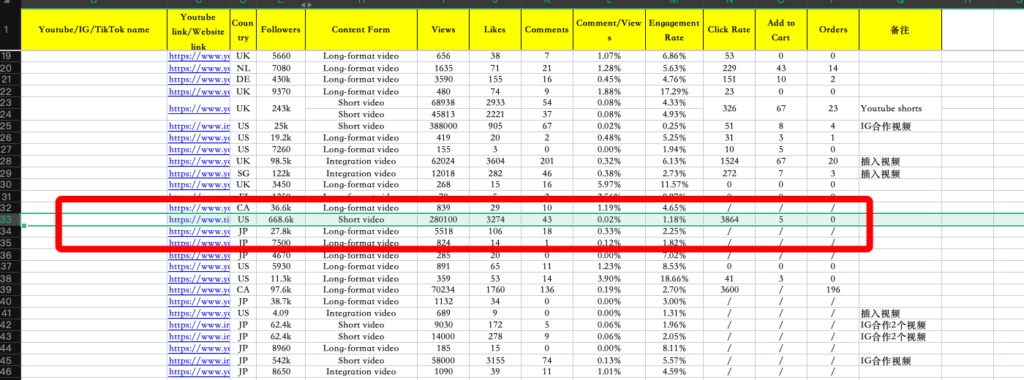
The creator regularly photographed female models and turned the shoots into short behind-the-scenes videos. Based on the creator’s follower count and previous views, we expected the video to generate substantial exposure and product interest.
The video received strong visibility, but it generated very few measurable clicks and sales.
Our hypothesis was that much of the audience followed the creator for the models, entertainment and behind-the-scenes photography experience—not necessarily for photography-product recommendations. The content attracted attention, but the audience demonstrated limited purchase intent for this particular product.
This did not mean that the collaboration had no awareness value. However, it did not meet our conversion objective. The experience showed us that follower count and video views were insufficient for evaluating a creator’s commercial value.
What the Evidence Shows
This campaign suggests that:
- A large following does not guarantee qualified traffic or sales.
- Content-category similarity does not automatically mean audience–product fit.
- Entertainment-driven views and purchase-driven views should be evaluated differently.
- Campaign success must be judged against its original objective: awareness or sales.
Case 2: We Worked With 45 Creators for One Product—Only 20 Generated a Tracked Sale
Many small brands assume that working with more creators will automatically generate more clicks and sales. But increasing the number of collaborations does not guarantee that every creator will produce measurable customer action.
Purchase behavior also varies by product. Food, beauty and inexpensive consumer products may sometimes generate faster decisions. Photography and electronic products—even relatively affordable ones—can require additional research. Customers may compare specifications, confirm compatibility, watch other reviews or search for better prices before purchasing.
In one of our campaigns, we worked with 45 creators to promote the same product. When we reviewed the results:
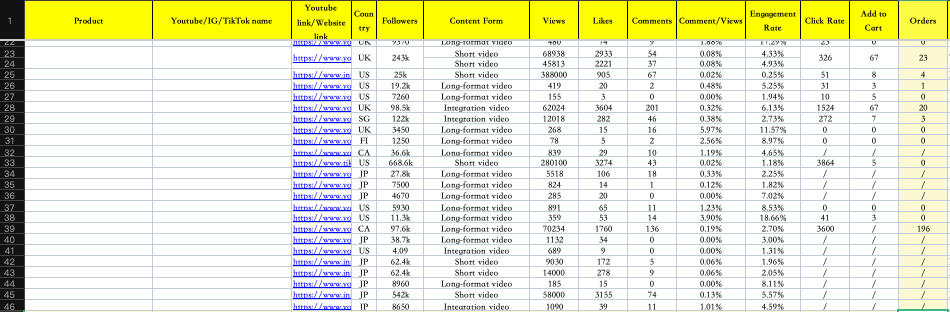
- 28 creators—approximately 62%—generated at least one tracked click.
- 20 creators—approximately 44%—generated at least one tracked sale.
- 17 creators generated no tracked clicks.
- 25 creators generated no directly attributable sales.
This does not mean that the remaining creators produced no value. Some may have contributed to product discovery, while customers later purchased through Amazon, Google or another untracked route.
What This Evidence Shows
- More creator partnerships do not guarantee proportionally more sales.
- Only a portion of creators may generate directly measurable results.
- Creator-level tracking is necessary to identify effective partnerships.
- A portfolio approach reduces reliance on any single creator.
Case 3: One Creator Won on Views. Another Won on Sales.
During the same product campaign, we worked with two creators who produced very different results.
Creator A generated significantly more video views and appeared to be the stronger performer based on reach. However, the video produced relatively few tracked clicks and sales.
Creator B received fewer views but generated more product-page visits, orders and attributable revenue. Although this creator reached a smaller audience, a greater proportion of viewers demonstrated purchase intent.
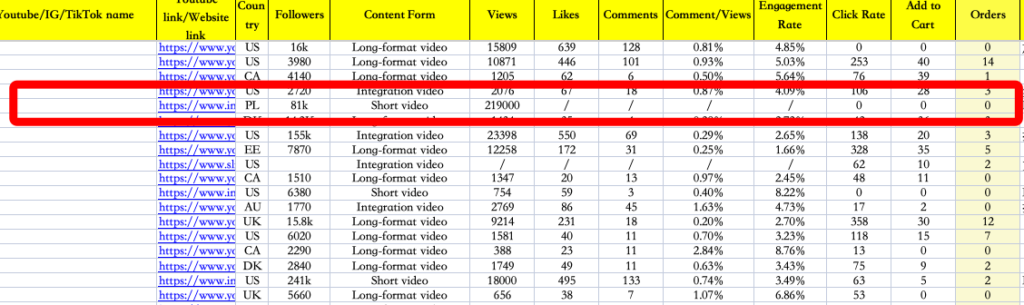
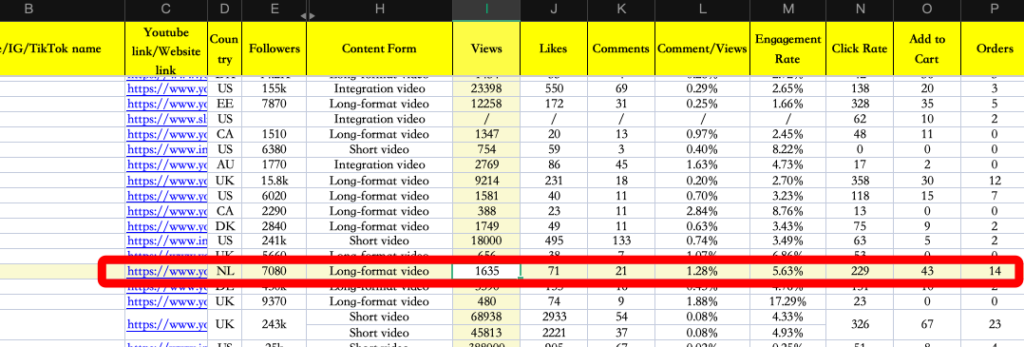
If we had evaluated the campaign using views alone, Creator A would have appeared to be the better investment. Once we included clicks, orders and acquisition cost, Creator B became the stronger choice for future conversion-focused campaigns.
Creator A was more effective at generating attention. Creator B was more effective at producing measurable customer action. But as a small brand, if you want to use small budget to get more expsoure and sales, you should find like creator B and good average+ sales and you could use ads to help them to get more exporue and amplify their videos.
What the Evidence Shows
- High video views do not necessarily produce high sales.
- A smaller but more relevant audience can have greater commercial value.
- Creator performance must be evaluated against the campaign objective..
For a small brand with a limited budget, Creator B may be the more valuable partner—especially if the campaign’s primary objective is sales. Brands should identify creators who generate above-average clicks, conversion rates or sales, then test their content through paid advertising.
Paid amplification can extend a high-converting video beyond the creator’s existing audience. However, strong organic sales do not guarantee equally strong advertising performance.
The principle is:
Use creator campaigns to discover content that converts, then use paid media to test whether that performance can be scaled.