Why More Views Don’t Mean More Sales — A Real Influencer Marketing Case Study
This analysis is based on a creator marketing campaign involving 61 unique sponsored videos. The review examines video performance, tracked link clicks, add-to-cart activity, and attributed purchases. Creator and brand identities, along with commercially sensitive details, have been withheld. Results are observational and do not establish causation. Tracking gaps and differences in campaign timing may affect comparisons.
Introduction — The Views Trap
Are you spending money on influencer marketing, getting thousands of views, but struggling to turn those views into actual sales?
We faced a similar question in one of our recent influencer marketing campaigns.
We worked with nearly 60 YouTube creators, published 61 videos, and generated over 250,000 views. But when we looked at the results, we noticed something interesting.
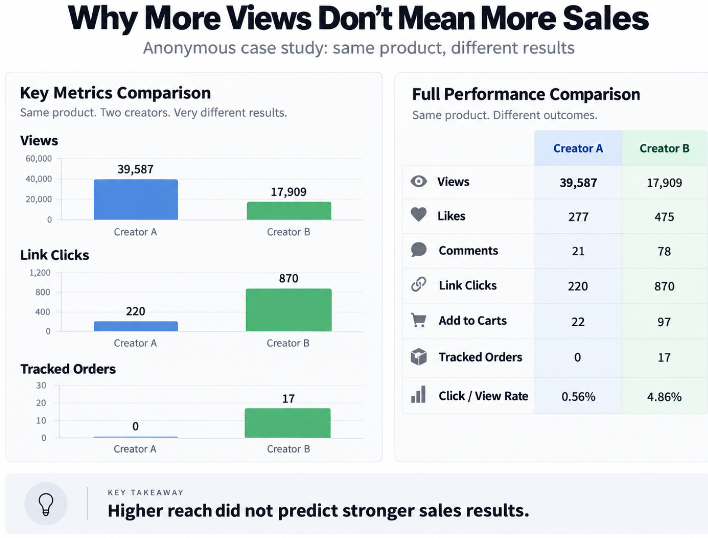
One product review received nearly 40,000 views but generated no tracked sales. Another review of the exact same product received fewer than 18,000 views but generated 17 tracked purchases.
So why did fewer views lead to better sales results?
In this case study, we’ll compare the two reviews, examine what the performance data tells us, and explore what marketers can do differently to turn influencer content into business results.
The Case Study — Same Product, Different Results
Product price: $229.00
The product in this case was a $229 LED video light designed for content creators, vloggers, and small studios.
At this price, it’s not exactly an impulse purchase. Potential buyers want to know whether the light is worth the money, how well it performs, and whether it fits their needs. That’s why a detailed, practical product review can play an important role in their buying decision.
We worked with two YouTube creators to review the same product, but their results were surprisingly different.
Creator A generated 39,587 views, more than twice Creator B’s 17,909 views.
However, the conversion data told a different story.
Creator A generated 220 link clicks, 22 add-to-carts, and no tracked purchases. Creator B, despite having fewer views, generated 870 clicks, 97 add-to-carts, and 17 tracked purchases.
Creator B’s click-to-view ratio was 4.86%, compared with just 0.56% for Creator A.
We tracked these results using Amazon attribution links. However, factors such as audience fit, promotional timing, and tracking limitations may have influenced the outcomes.
The key takeaway? More views didn’t necessarily mean more sales.
So what was different about these two videos, and what can marketers learn from them?
Why Views Failed to Predict Sales
Many influencer marketers select creators based on followers, views, and audience reach. These metrics are useful for brand awareness, but if your goal is sales, you need to look beyond views and focus on clicks, add-to-carts, and purchases.
Creator A generated 39,587 views, but only 220 clicks and 22 add-to-carts, with a click-to-view ratio of just 0.56%.
In contrast, Creator B received fewer views (17,909) but generated 870 clicks, 97 add-to-carts, and 17 tracked purchases. The click-to-view ratio reached 4.86%, nearly nine times higher than Creator A.
Why such a big difference?
Creator A’s viewers may have been watching out of curiosity, while Creator B may have attracted people who were more interested in buying. The way each creator demonstrated the product and addressed viewers’ needs may also have played a role.
The key takeaway: Views measure attention, but clicks and conversions tell us more about how that attention translates into business results.
What Was Different Inside the Videos?
The performance gap raises an important question: Was it the audience, or did the video content influence viewers’ buying decisions?
Before comparing the two videos, we need to understand what buyers actually look for when choosing an LED video light.
These are seven key features that can influence their purchasing decisions:
Top 7 Features Buyers Look for in an LED Video Light
- Brightness / Light Output – Is the light powerful enough for their shooting needs?
- Color Accuracy (CRI/TLCI) – Does it produce natural-looking skin tones and accurate colors?
- Color Temperature Range – Can users adjust the light from warm to cool to match different environments?
- Power Options & Battery Life – Can it run on batteries, and how long does it last?
- Build Quality & Fan Noise – Is it durable and quiet enough for video recording?
- Light Quality & Diffusion – Can it produce soft, flattering light and control shadows?
- Controls & Extra Features – Is it easy to adjust, and does it support useful accessories or app controls?
Using these seven criteria, we can compare how each creator demonstrated the product, answered potential buyers’ questions, and helped viewers decide whether the light was right for them.
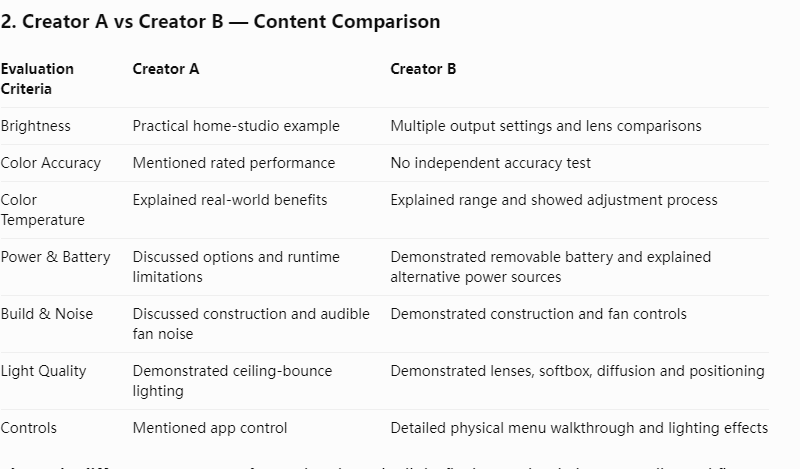
The main difference: Creator A focused on how the light fits into a simple home-studio workflow. Creator B spent more time demonstrating how the product works, how its accessories change the lighting, and how users can operate it.
However, Creator A offered a more direct discussion of actual fan noise, while Creator B demonstrated fan settings without measuring the sound.
Overall, Creator B provided more detailed demonstrations of several product features, potentially helping viewers evaluate whether the $229 light suited their needs.
Assessment based on the spoken video transcript, not a full visual review. Visual demonstrations that were not described in the transcript may be missing from this assessment.
Product Demonstration
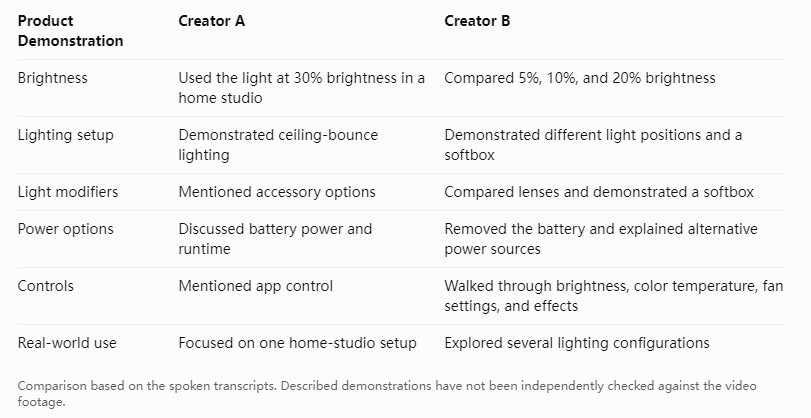
Both creators demonstrated the LED light, but they took different approaches.
Creator A focused on a simple home studio setup, showing how the light could illuminate a room at just 30% brightness using ceiling-bounce lighting.
Creator B provided more hands-on demonstrations. She tested different brightness levels, compared lighting lenses, showed how a softbox changed the lighting setup, and walked viewers through the physical controls.
The key difference was the depth of demonstration. Creator A showed how the light worked in one practical setup, while Creator B explored more ways to use and adjust it.
A product review should do more than tell viewers what a product can do. It should help them see how the product could work for them.
Decision-Useful Information
Beyond demonstrating the product, a good review should help viewers decide whether it’s worth buying.
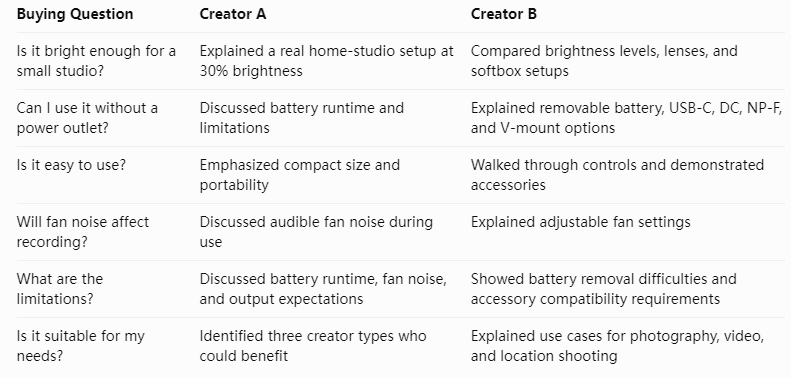
Creator A focused on who the light was suitable for, explaining its benefits for home studios while discussing limitations such as battery runtime and fan noise.
Creator B went further into practical ownership details, explaining how to replace the battery, use alternative power sources, and connect different lighting accessories.
Both reviews provided useful information, but Creator B offered more detailed guidance on how the product could fit into different shooting setups and future equipment needs.
These details could help potential buyers feel more informed before spending $229, although we cannot conclude that they directly caused the higher sales.
Purchase Guidance
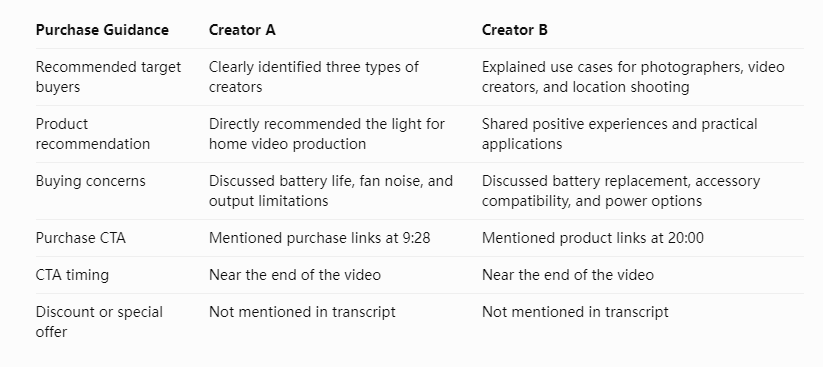
Both creators included product links near the end of their videos, but their approaches were slightly different.
Creator A gave a clear recommendation, explaining who the light was best suited for and encouraging interested viewers to check the purchase link.
Creator B took a more educational approach, spending more time demonstrating the product, explaining accessories, and addressing practical questions before mentioning the purchase links.
Interestingly, Creator A provided a more direct call to action, yet Creator B generated more tracked clicks and purchases.
This suggests that a clear CTA alone may not explain conversion performance. The information viewers receive before reaching that CTA may also matter.
5. What Marketers Should Do Differently
First: Evaluate creators beyond average views.
Second: Design content around buyer questions.
Third: Measure the entire funnel.

Conclusion — Views Are a Starting Point, Not the Goal
The lesson isn’t that views don’t matter. It’s that views alone cannot tell you whether an influencer partnership worked.
A successful campaign doesn’t simply reach people. It helps the right people move closer to a purchase decision.